
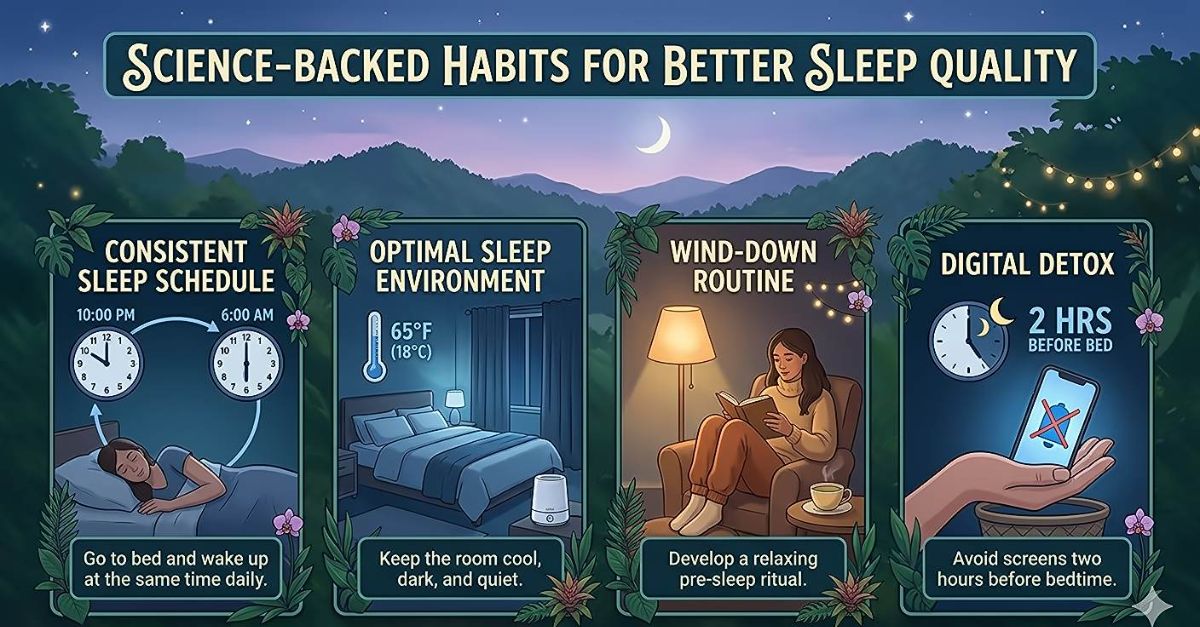
Sleep is not a passive state — it's when your brain consolidates memories, your body repairs tissue, and your immune system strengthens. Consistently poor sleep is linked to obesity, cardiovascular disease, depression, and reduced life expectancy. The good news: most sleep problems are behavioural, not medical.
1. Keep a Consistent Sleep Schedule — Even on Weekends
Your body runs on a circadian rhythm, a 24-hour internal clock. Going to bed and waking at the same time every day — yes, including weekends — is the single most powerful thing you can do for sleep quality. Varying your schedule by more than one hour significantly disrupts your sleep pressure and melatonin timing.
2. Keep Your Bedroom Cool (16–19°C / 61–66°F)
Your core body temperature must drop by about 1°C to initiate sleep. A cool room accelerates this process. Studies from the University of South Australia found that a bedroom temperature of 18.3°C produced the fastest sleep onset and deepest slow-wave sleep. Use lightweight bedding and consider a fan if you run warm.
3. Avoid Screens for 60 Minutes Before Bed
Blue light from phone, tablet, and laptop screens suppresses melatonin production by up to 50%, according to Harvard research. If avoiding screens entirely isn't realistic, enable Night Mode (which shifts the display to warmer tones) and reduce brightness. Blue-light blocking glasses are a lesser substitute — removing the screen is always better.
4. Limit Caffeine After 2pm
Caffeine has a half-life of 5–7 hours, meaning a 3pm coffee still has half its caffeine in your system at 9pm. It blocks adenosine receptors — adenosine is the chemical that makes you feel sleepy. Switch to herbal tea or water after 2pm. If you're sensitive to caffeine, noon is a safer cutoff.
5. Create a 20-Minute Wind-Down Routine
Your nervous system needs a transition from the alertness of the day to the calm required for sleep. A consistent pre-sleep routine signals your brain that sleep is coming. Effective options include reading physical books, light stretching, journaling, or a warm shower (the subsequent cooling of your body triggers sleepiness).
6. Reserve Your Bed for Sleep Only
Working, watching TV, or scrolling social media in bed teaches your brain to associate the bed with wakefulness. Over time this makes it harder to fall asleep there. If you cannot sleep after 20 minutes, leave the bed, do something calm in dim light, and return only when sleepy. This technique, called stimulus control, is a core component of CBT-I (Cognitive Behavioural Therapy for Insomnia).
7. Manage Stress Before It Manages Your Sleep
Racing thoughts are the most cited cause of difficulty falling asleep. Write a to-do list for the next day before bed — research from Baylor University showed this significantly reduced the time to fall asleep by "offloading" worries from working memory. Breathwork, specifically the 4-7-8 method (inhale 4s, hold 7s, exhale 8s), activates the parasympathetic nervous system rapidly.
When to See a Doctor
If you have consistently applied these habits for four weeks and still struggle with sleep, consult a doctor. Conditions like sleep apnoea, restless leg syndrome, or chronic insomnia require professional treatment. Do not use sleep medication as a long-term solution — it treats symptoms without addressing causes.



Comments